
“Take it easy in this capitalist hellscape”: Lessons I learned from Alice Wong
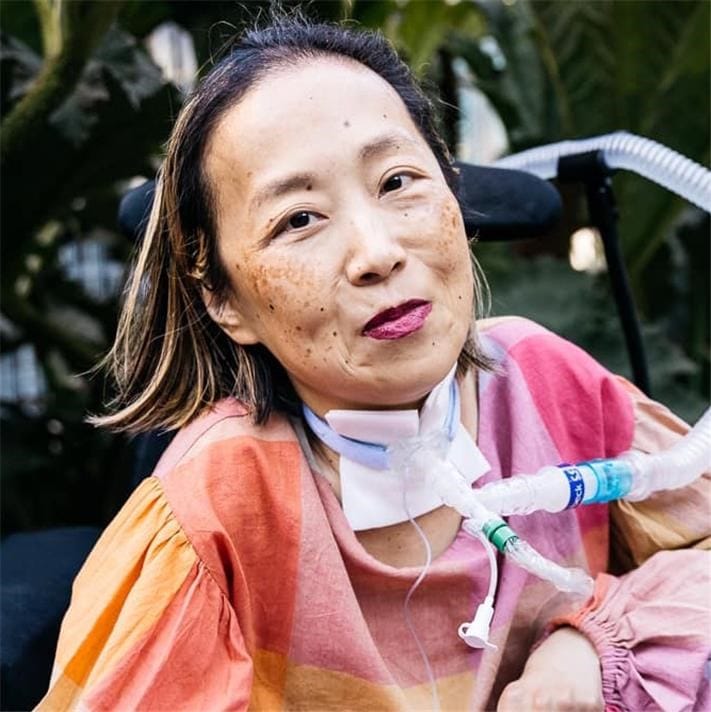
“Take it easy in this capitalist hellscape.” That’s the last line that Alice sent me. We had been exchanging emails, as I had quoted her in my new book and wanted to make sure she was OK with it. I asked how she was doing. “I'm hanging in there despite the fascist fuckery,” she told me. I made a mental note to reach out next time I was in the Bay Area. Though we had never met in person, I just knew we would be BFFs.
Alice died on November 14th this year at the age of 51, and our sector and world lost one of its brightest lights. Among her many accomplishments, she founded the Disability Visibility Project; advocated fiercely for disabled people; was a brilliant and prolific writer; spoke up for Palestine and raised millions to help Palestinians; received a “genius” fellowship from the MacArthur Foundation; and advised the Obama administration on disability policy.
Alice was a force whose work and existence made all our lives better. I learned so much from Alice and her writings and work and who she was as a person. Here are just a few lessons I’ll be carrying forward:
See and treat marginalized people as full and complex human beings: Alice was a fierce advocate for disabled people and disability rights. And she was also deeply human and hilarious. She loved food. She cussed a lot. Society often puts people who are most affected by injustice on pedestals, treat them like fragile baby birds, or define them only by the oppression they face. But we are more than that. We, like other human beings, deserve to be fully human, which means being allowed to be messy, to make mistakes, on occasion to be grumpy and annoyed, like everyone else. I always cracked up reading her email auto-response: “If you are pitching yourself or someone to be on my podcast, you failed. My podcast ended several years ago and if you actually listened to it or did some minimal research, you would know.”
Redefine the concept of “professionalism”: This is the topic I quoted Alice on in my book. “Professionalism,” the way we’ve always defined it, tends to exclude disabled people and in general people who are not educated, mid-and-upper income straight white dudes. For example, Alice wrote about what society’s idea of a “professional” voice on radio or podcasts sounds like, and how voices like hers, which was affected by her disability, would not fit that current definition. By changing how we view what is “professional,” we can be more inclusive of people of different backgrounds.
Advocate fiercely and unapologetically. Alice’s was a vital voice for disability justice. She also spoke up against the genocide and raised money to help Palestinians remain digitally connected. According to her friend Yomi Young in this interview, “some people were not happy about that, and there were people who challenged her voice, that maybe her Genius Grant should be rescinded. And Alice stood firm, and she was unflinching, and she would not back down.”
Lift up and support others when you can: Alice used her platform, connections, and resources to lift up people. The Disability Visibility Project (DVP) was one such way she did that, helping amplify the voices of disabled people. She was also known for sending care packages to people, even those she never met. She asked if I wanted to do a Nonprofit AF podcast, offering me a grant she had received and to connect me to producers and other resources. (I declined, telling her I was allergic to more work and just wanted to laze around the couch, eating chocolate and rewatching Derry Girls). When I published my book, she offered to write a blurb and help promote it.
Find joy and humor beauty and not let the systems break you. When I declined to start a podcast, she was empathetic. “Here's to less work and doing things that are fun!” In our last few emails to each other, we were talking about my trip to Vietnam this past summer. I was lamenting about missing the $12 massages, which I would get during the rare times when the kids could be left alone for a couple of hours. She was interested in the iced coffee there, hearing that Vietnam has amazing coffee (it does). For all the serious things Alice faced and fought, she never lost sight of all the wonderful things in life. Her book, Year of the Tiger: An Activist’s Life, was full of moments of joy and humor.
Connect with people and build community: Alice was a proponent of a world where community is strong, rooted in joy, and people cared for one another, and her work helped us make progress toward that vision. Although we never met in person, I always felt like I had a supportive older sister out there that I could vent about the “fascist fuckery” with. That was Alice’s magic. She prioritized people. She made you feel seen.
There are many more lessons, but I’ll stop here.
OK, maybe one last lesson I learned.
Life is fleeting; cherish the people around you. In all the busy-ness of life and with all the work we do, especially in this sector, where there is constant injustice we’re addressing, it’s easy to take for granted our time with one another. But life is so much more fragile than many of us want to admit. We think those we love will always be around, when this is not true. Prioritize spending time with those you care about. Let people know you appreciate them. While I am grieving the loss of Alice and all the good trouble we’ll never get into together, I am comforted by the fact that the very last thing I wrote to her was, “I hope you're taking care of yourself. I appreciate your voice so much in the world.” (She wrote back. “I appreciate you too, Vu" followed by the reminder for me to take it easy in this capitalist hellscape.)
Alice may be resting now, but her work continues on. We can honor her by listening to disabled people, advocating for disability justice, speaking up against oppressive systems, being bold and courageous, taking care of one another, building community, continuing to keep going even when the odds are rough, and finding moments of rest and joy and levity while we fight to make our world better.


