
Fascism, and why we all need to support trans rights, no matter what issues we're working on
Hi everyone, this week on May 28th at 1pm to 2pm Pacific, I’ll be in conversation with some brilliant leaders (including Jan Masaoka and Al Cantor) about regulatory and tax reform of private foundations, such as with Donor-Advised Funds (DAFs). It’s free. Register here.
I’m writing this from Toronto, where I just spoke at one of the largest gatherings of animal rights and veganism advocates I’ve been to. It was amazing, and not just because I could eat everything and didn’t have to settle for a blueberry garnish and a mint leaf plucked off a nonvegan cake for dessert.
It was inspiring and heartening to meet so many dedicated people who care about animals and to learn about the creative, vital, and successful work they’ve been doing. One of the most inspiring and illuminating sessions was about a community in Mexico’s Yucatán Peninsula mobilizing against a pig farm. The farm, owned by a giant corporation, raised and slaughtered thousands of pigs, with most of the meat sold overseas.
The effects were horrifying. Community members could no longer drink the water and had to use bottled water because of the runoff of blood, antibiotics, and waste. Children were getting sick from the burning of the feces creating acrid smoke. The air and water and land were all polluted. Fruit and vegetables were contaminated and no longer edible. The mental health of everyone in the village suffered due to the constant sounds and smells and sight of death.
The community organized, lobbied, and protested and faced down police brutality, where organizers were beaten and arrested. At the end, though, they won, driving out the factory farm. Now they begin the process of healing the people and land, which will still take many years for this small community.
This case highlights how connected all our issues are. In this instance, we saw the intersection of animal rights, environmental protection, children’s welfare, food security, physical and mental health, poverty, community organizing, labor rights, and politics. If we dig further, we probably see other subsectors as well, such as the arts.
I bring this up because the illusion of causes being separate has been a problem in our sector. The lack of resources means people often don’t have time to understand and connect with those working in other issues. Also, because we have some entrenched philosophies such as this idea that every nonprofit and movement must be hyper-focused on its mission, and that doing anything outside its scope is “mission drift.” Combine all that with fear of losing donors and funding from being involved in certain causes considered to be controversial or too political, and many organizations choose to hunker down and “stay in their lanes,” so to speak.
But this mission-driven isolationistic tendency has been preventing us from having more meaningful conversations and analyses, forming sector-level strategies, and being effective at actualizing the conditions that would lead to progress on every mission and issue and equity and justice broadly for our world.
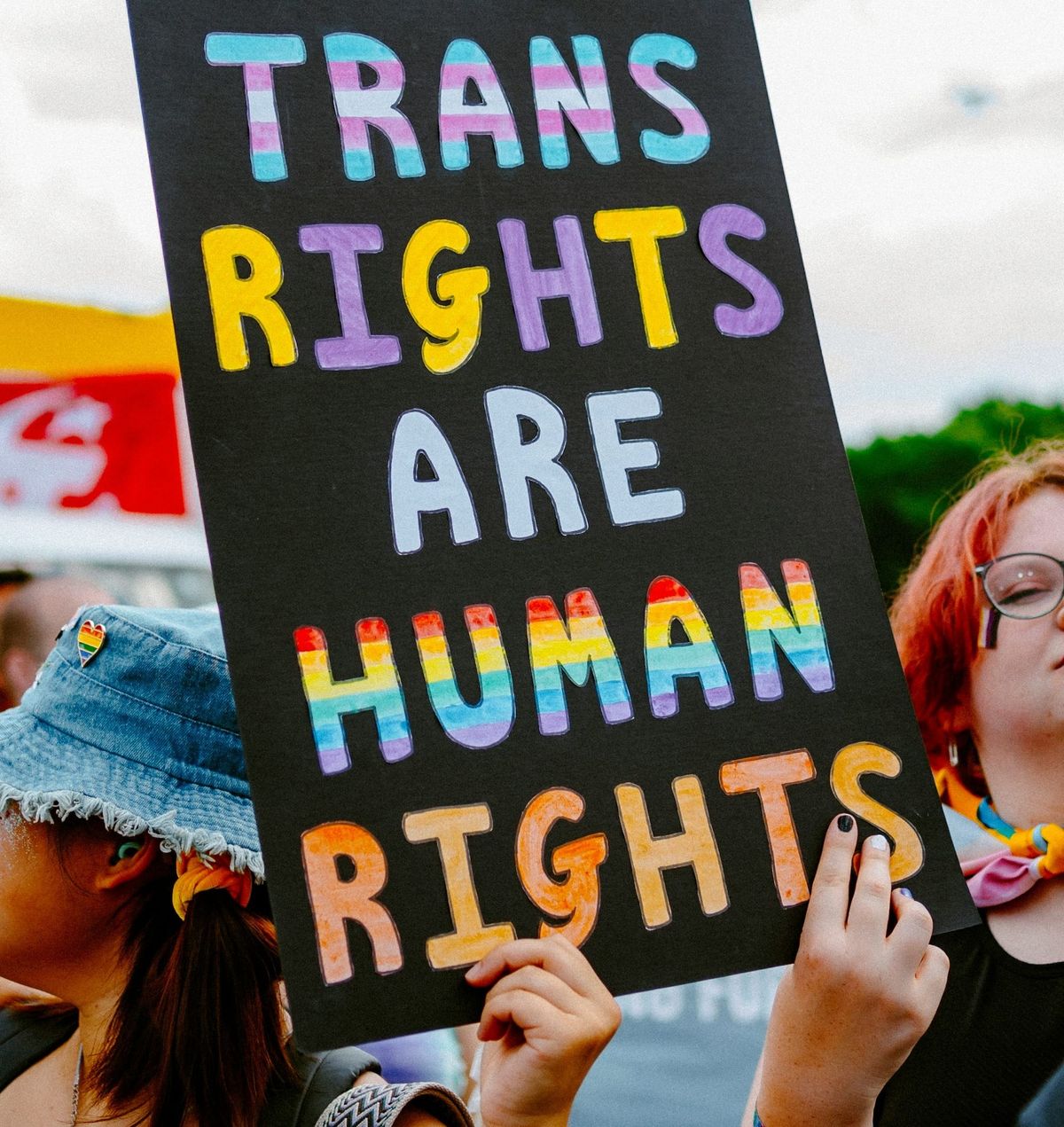
A few weeks ago, a colleague told me there was an effort to get organizations to sign on to voice opposition against an anti-trans bill that was being considered in the state legislature. Some immigrant-and-refugee advocacy organizations decided not to sign on, believing it was too politically charged to add their name when they had their own battles to fight protecting communities from ICE kidnappings and other horrific things dished out by this administration.
While their decision had some sort of logic, it was disappointing. The attacks on immigrants and the attacks on trans people are not separate issues. Nor the attacks on abortions, democracy, the environment, and so on. They are all targets of a rapidly rising and effective fascist movement.
History shows us that transgender people are often the first community targeted by oppressors, as a test to see how society responds. In 1933 when the Nazis came to power in Germany, one of the first things they did was raid the Institute of Sexology, which provided vital research on queer identity and advocacy for trans and queer people. They publicly burned thousands of books and files before rounding up trans and queer people for concentration camps. The Nazis knew that if society will not defend the people with the least social and political power, it leaves an opening for attacks on other marginalized people.
The fascists in power today are using the same playbook used by the Nazis in power in the past. This is why we have been seeing the exponential increase worldwide of the attacks on trans people. The effects have been devastating. A growing number of trans movement leaders and activists, especially trans women of color, have been murdered. In this vital piece by Chris Talbot, they point out research showing the suicide rates of trans and nonbinary youth have increased 72%.
All of us are familiar with the poem by Pastor Martin Niemöller, that starts with “First they came for the communists, and I did not speak out because I was not a communist” and ends with “Then they came for me, and there was no one left to speak out for me.”
We profess to agree with the poem, but from the way our sector sometimes behaves, it doesn’t seem that we understand or believe its warning. On a webinar where I was presenting a couple of months ago, a colleague was upset I had brought up the attacks on trans people. "Why do you keep mentioning trans people? How is it relevant?"
Understanding historical context and what's currently happening, we must all support trans rights, regardless of what issues we’re working on. Not only is this the intrinsically right thing to do, but it’s also the most strategic for all our causes, because supporting trans people weakens fascism. It sends the message that we will not be divided, that we will protect one another, that we will not fall prey to decades-old Nazi tactics.
If we care about immigrants, then we must fight fascism, which means supporting trans people. If we care about animals, we must fight fascism, which means supporting trans people. If we care about poor people, disabled people, the arts, the environment, older adults, children, voting rights, and the hundreds of other critical issues and communities our sector cares about, then we must fight fascism, which means supporting trans people.
Every subsector in our field faces numerous and constant challenges. Increased demands. Lack of funding. Trying to compete with so many other causes and issues, all of which are urgent. And all of us are exhausted.
But “staying in our lanes” is not a good strategy. We must see our causes and communities we serve as interconnected, not separate from one another, and that the only way we can all be safe is if we stand in solidarity and support one another when any of our communities, especially the most vulnerable, are under attack.
--
Vu’s book, Reimagining Nonprofits and Philanthropy, is out. Order your copy at Elliott Bay Book Company, Barnes and Nobles, or Bookshop. If you’re in the UK, use this version of Bookshop. If you plan to order several copies, use Porchlight for significant bulk discounts. Also, if you're buying 25 copies or more, I'll be glad to call in for a 50-minute discussion; please contact NWBspeaking@gmail.com.


